
Core Keywords: avocado packaging, avocado cartons, avocado export boxes, fruit export packaging, sustainable avocado cartons
Introduction
Avocados have become one of the fastest-growing fruits in global trade, driven by demand in North America, Europe, and Asia. Major producing countries such as Mexico, Peru, Chile, Kenya, and Colombia export millions of tons annually.
However, avocados are highly sensitive to pressure damage, temperature fluctuation, and ripening imbalance. Properly engineered avocado packaging boxes are essential to preserve fruit firmness, reduce bruising, and maintain quality throughout cold-chain logistics.
Why Avocado Packaging Requires Special Design
Unlike apples or bananas, avocados continue to ripen after harvest. Export packaging must balance:
- Structural protection against compression damage
- Ventilation for temperature regulation
- Humidity control to prevent dehydration
- Stacking strength for container loading
- Compliance with international export standards
Poor packaging can result in soft spots, internal browning, and significant financial losses.
Key Features of Avocado Cartons
1. High Compression Strength
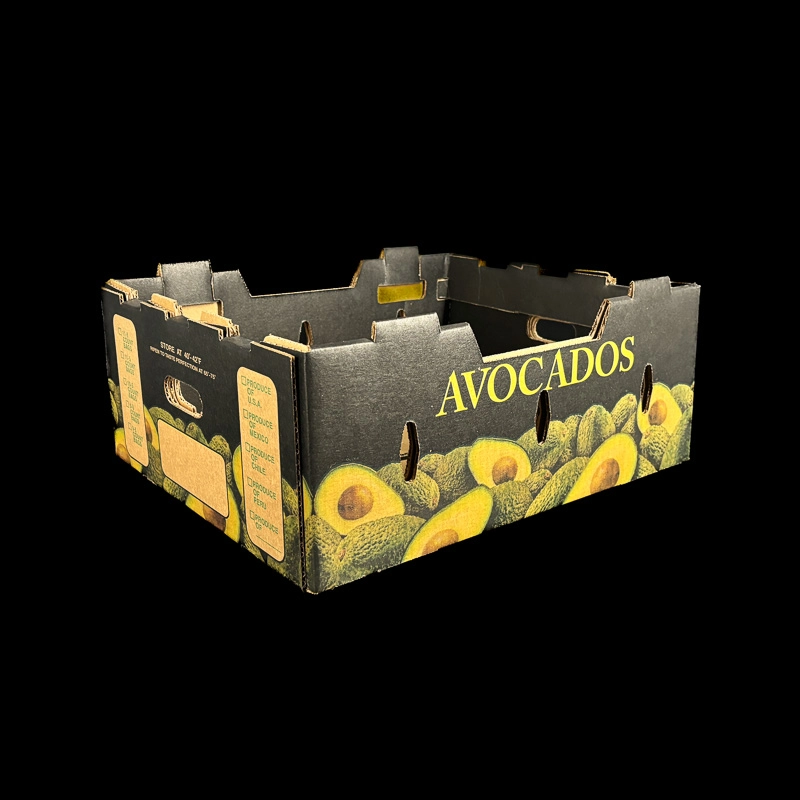
Avocado export boxes are often stacked in refrigerated containers. Corrugated cartons must maintain structural integrity under vertical load pressure. Double-wall board is commonly used for premium shipments.
2. Optimized Ventilation Pattern
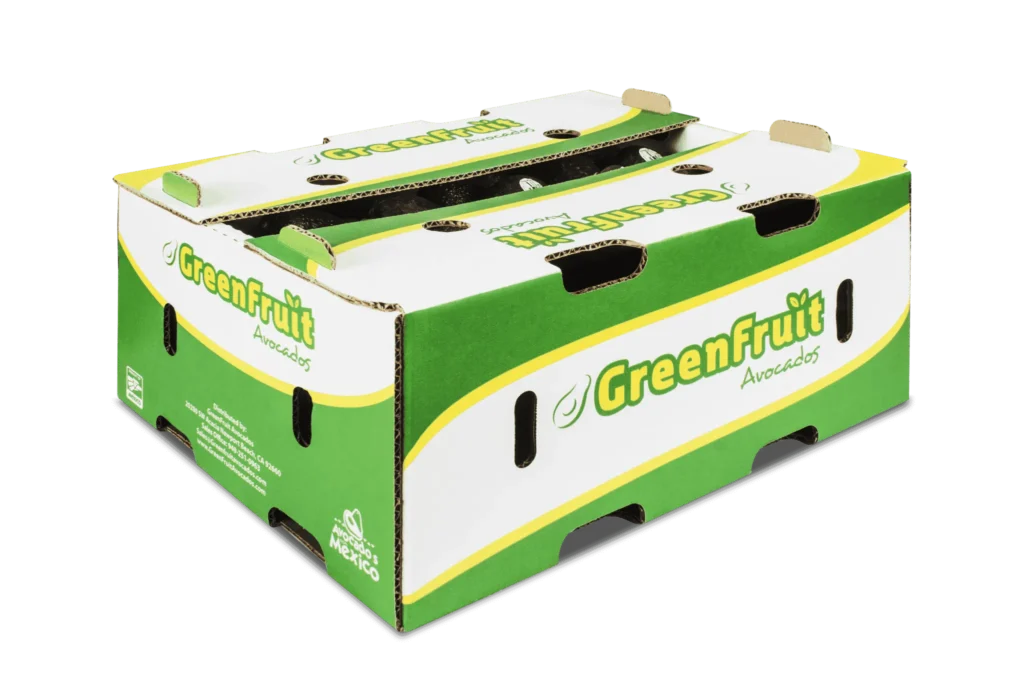
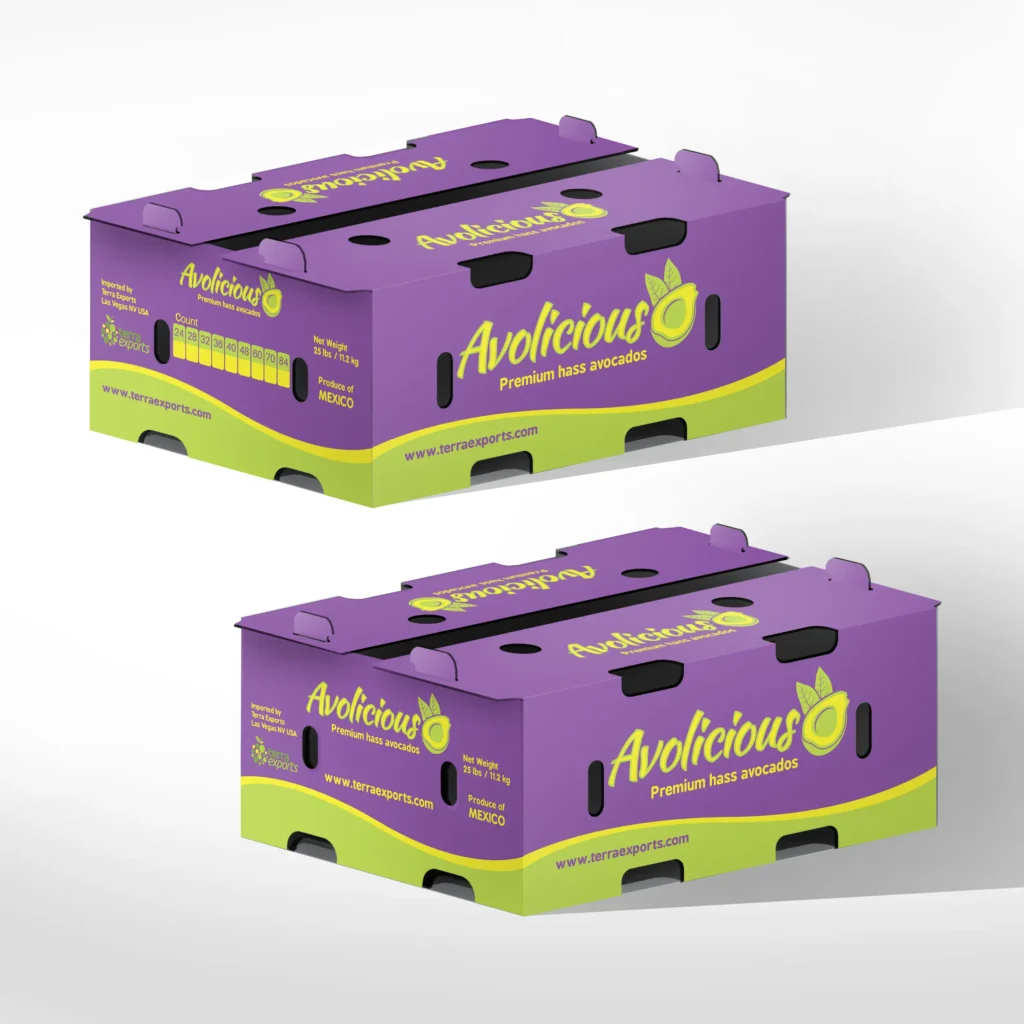
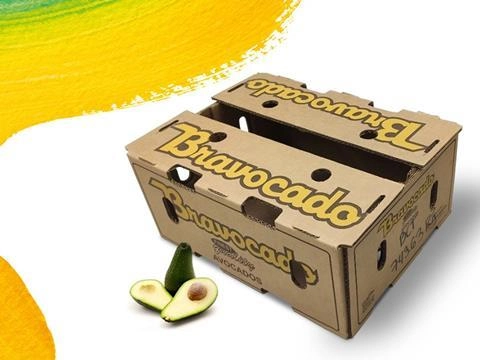
Precision-cut ventilation holes allow proper airflow inside reefer containers, supporting temperature consistency and controlled ripening.
3. Internal Fit & Cushioning
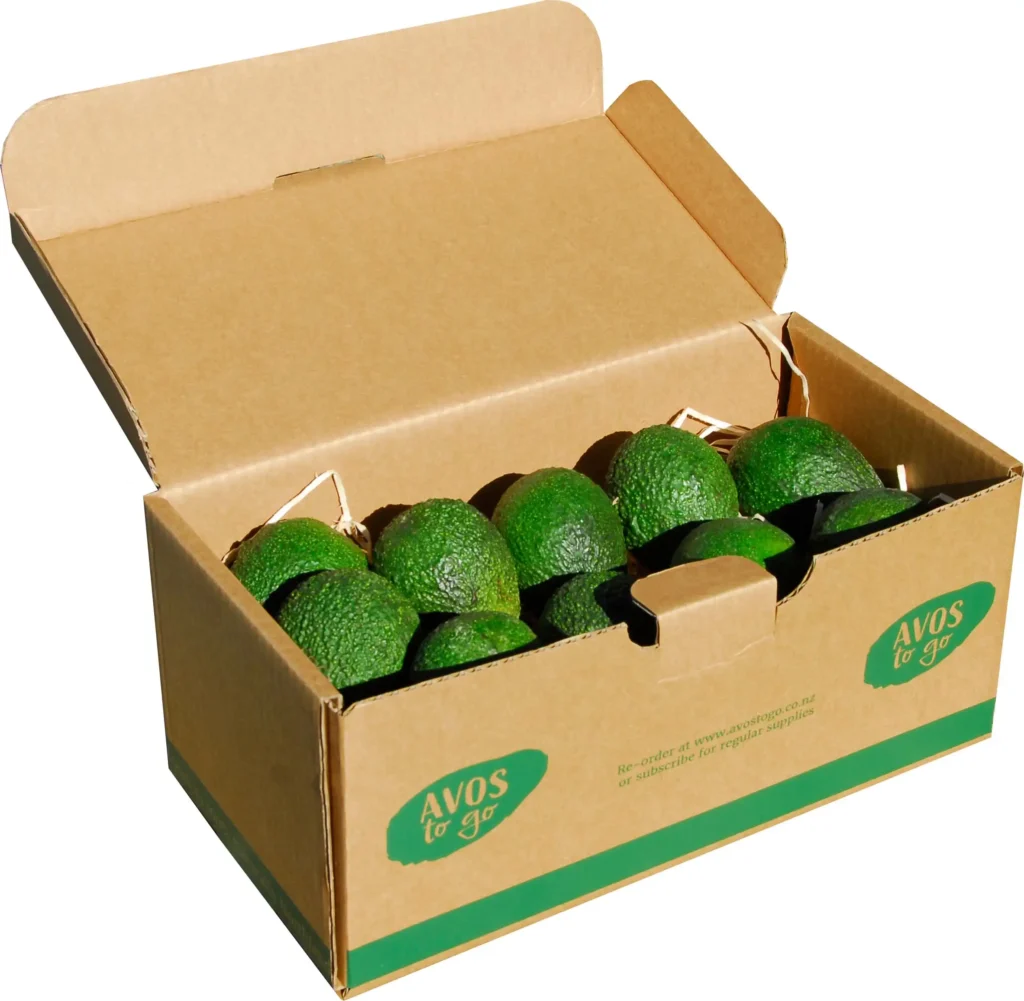
Some avocado packaging solutions incorporate partitions or molded inserts to minimize fruit movement during transit.
4. Moisture-Resistant Surface
Refrigerated shipping environments can create condensation. Water-resistant coatings help maintain carton strength in humid conditions.
5. Retail-Ready Printing
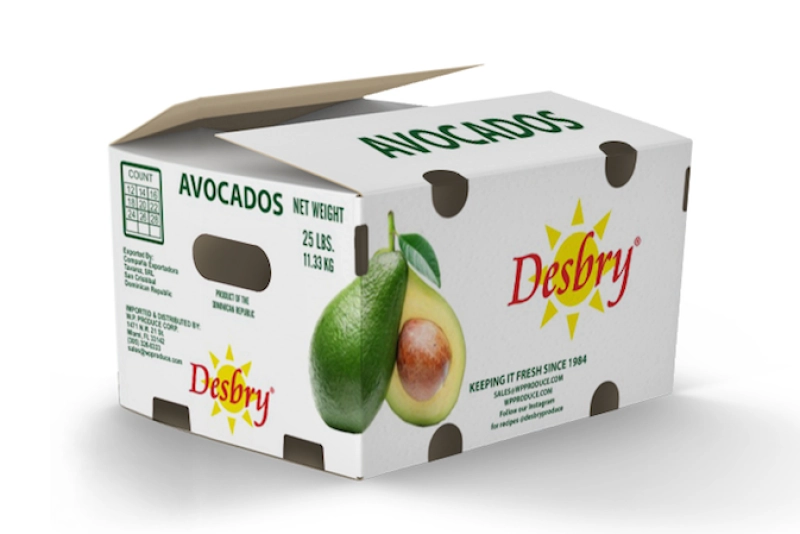
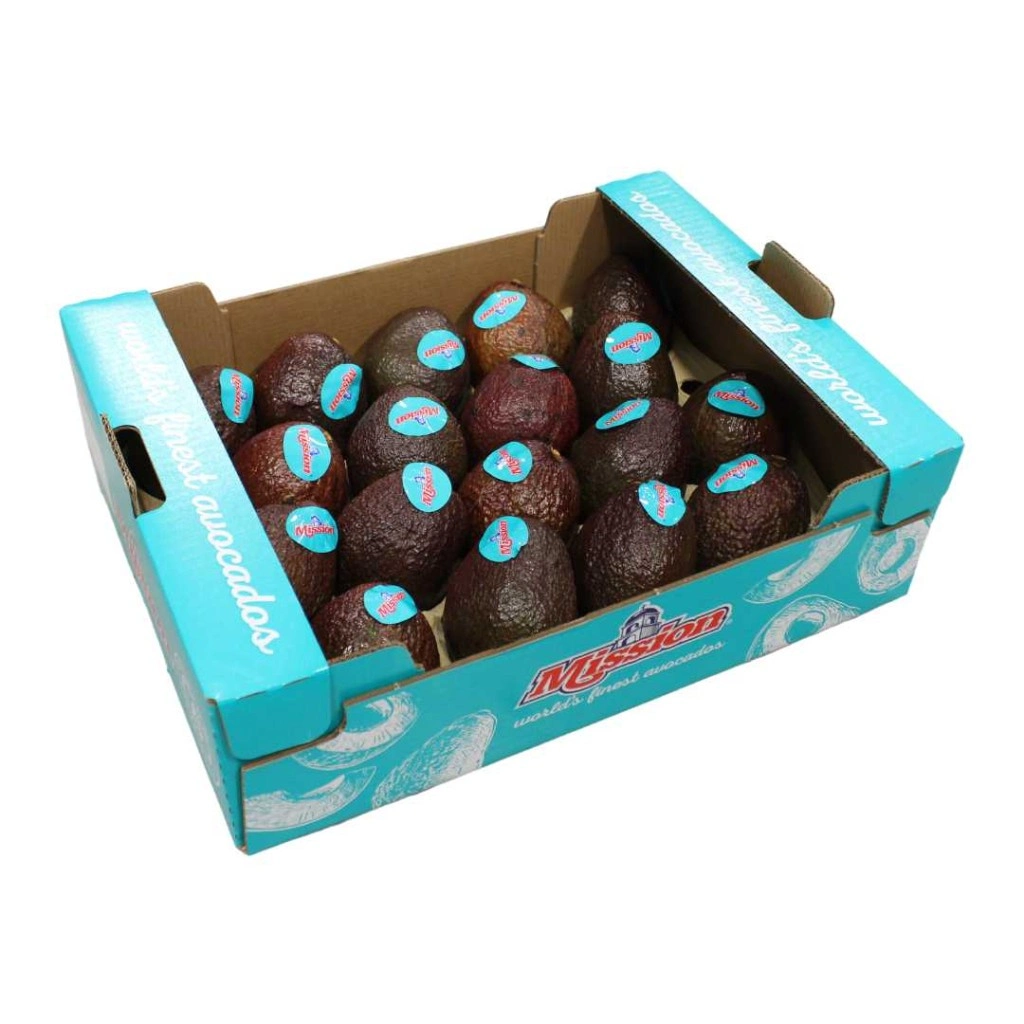
High-quality graphics enhance shelf appeal and communicate origin (e.g., “Hass Avocados – Product of Mexico”). Strong branding increases consumer trust.
Regional Packaging Practices
- Mexico: Uses standardized 4kg and 10kg avocado export cartons for U.S. and EU markets.
- Peru & Chile: Focus on long-distance sea freight packaging with enhanced stacking strength.
- Kenya & Colombia: Increasing investment in sustainable avocado cartons to meet EU green regulations.
These regional strategies demonstrate how avocado packaging adapts to different trade routes and regulatory environments.
Sustainability in Avocado Packaging
Retailers and importers increasingly demand sustainable avocado packaging. Corrugated cartons made from recyclable fiber reduce plastic usage and align with environmental standards.
Water-based inks and biodegradable coatings further enhance eco-performance while maintaining durability.
The Business Value of High-Quality Avocado Export Boxes
Well-designed avocado cartons:
- Reduce spoilage rates
- Improve supply chain efficiency
- Enhance brand positioning
- Meet global food safety compliance
- Support premium pricing strategies
In competitive international markets, packaging quality directly influences profitability.
Conclusion
Avocado packaging is not just about transport—it is about protecting a high-value agricultural product across continents. By investing in durable, ventilated, and sustainable avocado export boxes, growers and exporters can safeguard quality and strengthen their global presence.
FAQ
Q: Why are avocados sensitive during shipping?
A: Avocados are prone to pressure damage and uneven ripening, requiring protective and ventilated packaging.
Q: What type of carton is best for avocado export?
A: High-compression corrugated cartons with ventilation holes and moisture resistance are ideal.
Q: Are avocado cartons recyclable?
A: Yes, most avocado packaging is made from recyclable corrugated cardboard.
Q: How does packaging affect avocado shelf life?
A: Proper airflow and structural support reduce bruising and maintain optimal ripening conditions.